What Is Vibe Coding and Why Every Non-Developer Is Learning It in 2026
A year ago, building software meant years of training. In 2026, people are shipping working apps without writing a line of traditional code — and the trend has a name. So what is vibe coding, and why is everyone from founders to complete beginners suddenly learning it? Here is a plain-English breakdown.
What vibe coding actually means
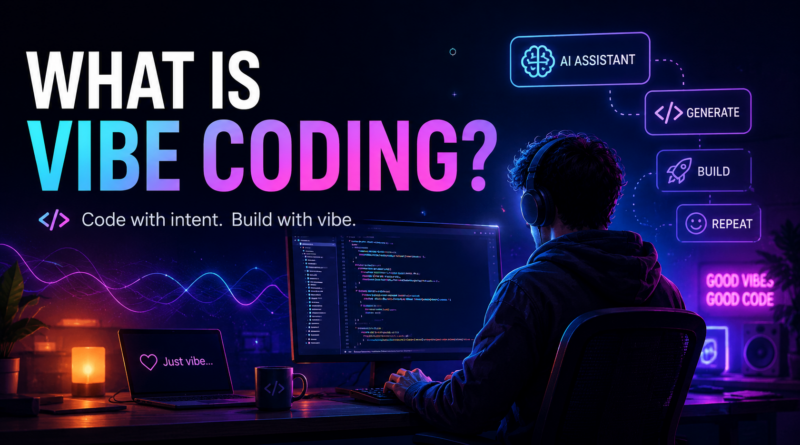
Vibe coding is the practice of building software by describing what you want in everyday language and letting an AI assistant generate the code. Instead of writing every line, you state your intention — “build me a simple expense tracker with a chart” — review what the AI produces, run it, and refine through conversation. The term was coined by AI researcher Andrej Karpathy in early 2025 to describe building by intent rather than by instruction, and it caught on so fast that Collins named it the word of the year for 2025.
Why non-developers are flocking to it
The appeal is simple: the gap between an idea and a working prototype has almost vanished. People who never had the time or money to learn programming can now attempt tools, websites, automations and small apps in an afternoon. There is even a quiet advantage to being a non-coder — you do not know what is “supposed” to be hard, so you ask the AI to attempt things experienced developers might dismiss. Surveys suggest a large share of people now using these tools have no traditional development background at all.
The tools powering the trend
A whole ecosystem has grown up around vibe coding. AI-native editors like Cursor and Windsurf, along with GitHub Copilot, now offer “agent” modes that do not just write code but run it, read the errors and fix them on their own. Prompt-to-app platforms such as Bolt.new, Replit, Lovable and Google’s AI Studio let you go from a sentence to a live app in minutes. Better models with longer memory mean the AI can now understand an entire project, not just one file, which is exactly why 2026 feels like a turning point.
What it is great for — and what it is not
Vibe coding excels at speed: prototypes, internal tools, landing pages and testing an idea before you invest in it. For a solo founder or a small team, that is transformative. It is weaker, though, when it comes to security, performance and long-term maintainability. AI-generated code can hide bugs and vulnerabilities that an untrained eye will miss, which is why human oversight remains non-negotiable for anything serious or public-facing.
How to start the smart way
Begin with a small, low-stakes project and describe it clearly — the better your prompt, the better the result. Run what the AI builds, read the error messages, and feed them back to improve it. As you go, pick up the basics of how your app works rather than blindly trusting the output, since a little understanding saves you from big problems later. Treat the AI as a capable collaborator you direct, not a black box you obey.
A simple first project to try
The best way to understand vibe coding is to build something tiny. Open a prompt-to-app tool and describe a small idea in one clear sentence — a habit tracker, a tip calculator, a simple landing page. Run what it produces, see what breaks, and describe the fix in plain words. Within an hour you will have a working prototype and, more importantly, a real feel for the loop of describe, run, refine that powers the whole approach.
The skills that still matter
Vibe coding lowers the barrier, but it does not remove the need for judgement. Clear thinking and clear prompts produce better results, and a basic grasp of how your app works helps you spot when the AI goes wrong. Reviewing output, testing edge cases and understanding security basics remain genuinely valuable. The role shifts from typing every line to directing, checking and improving — closer to an editor or product manager than a traditional coder.
Where the trend is heading
Momentum is only building. Tools now offer agent modes that write, run and debug code on their own, and adoption has spread well beyond startups into large companies and complete beginners. A striking share of people now building this way have no traditional development background at all. As models keep improving, expect the gap between idea and working software to keep shrinking — which makes a little fluency in vibe coding a genuinely useful skill to pick up now.
Is vibe coding right for you?
If you have ideas but no coding background, vibe coding is one of the most empowering skills you can pick up this year. Entrepreneurs can build prototypes without hiring a developer, marketers can spin up tools and pages on demand, and curious beginners can finally make the apps they always imagined. You do not need to become a software engineer — you need enough fluency to describe what you want and judge what you get back.
A note on quality
Speed is the headline benefit, but quality still requires care. Always run and test what the AI builds, especially before sharing it with others, and never ship code handling sensitive data without proper review. Think of yourself as the editor: the AI drafts quickly, but you are responsible for whether the final product is safe, accurate and good enough to put your name on.
Vibe coding pairs perfectly with entrepreneurship, since you can now build your own tools for free. To turn that into income, read our guide on how to start a business in 2026 with no money using AI tools.