Trump Warns Taiwan Against Formal Independence From China
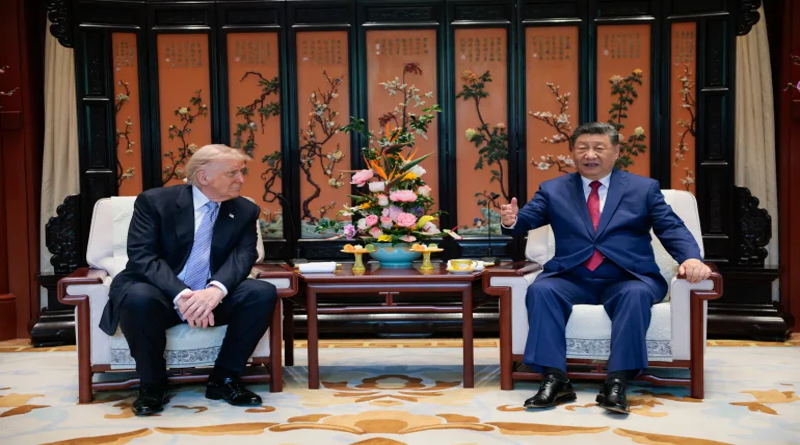
Donald Trump has warned Taiwan against formally declaring independence from China, saying the United States is not looking to support actions that could trigger conflict in the Asia-Pacific region. His comments came after a high-profile meeting with Chinese President Xi Jinping in Beijing, where Taiwan reportedly became one of the central topics of discussion.
The statement quickly attracted global attention because tensions between China, Taiwan, and the United States continue rising. Searches for “Taiwan China conflict,” “US Taiwan policy,” and “Trump China relations” have surged as concerns grow over regional security and possible military escalation.
During an interview with Fox News, Trump said he did not want Taiwan to make a formal move toward independence and stressed that the United States was trying to avoid war with China.
“You know, we’re supposed to travel 9,500 miles to fight a war. I’m not looking for that,” Trump said, adding that he wanted both sides to “cool down.”
His remarks reflect the long-standing but delicate US position on Taiwan — supporting the island’s security while officially not endorsing independence.
Why Taiwan Remains A Sensitive Issue
Taiwan remains one of the most sensitive and dangerous issues in US-China relations.
China considers Taiwan part of its territory and has repeatedly said reunification is a national priority. Beijing has never ruled out using military force if Taiwan formally declares independence.
At the same time, Taiwan operates as a self-governing democracy with its own government, military, economy, and political system. Many people in Taiwan view themselves as separate from mainland China, although most support maintaining the current status quo rather than formally declaring independence.
Searches for:
- Taiwan independence news
- China Taiwan military tensions
- Taiwan latest updates
- US China conflict
continue trending as military activity around the island increases.
The United States officially follows the “One China” policy, meaning Washington recognizes Beijing as the official Chinese government. However, US law also requires support for Taiwan’s self-defense capabilities.
This balancing act has defined American policy in the region for decades.
Trump Says US Policy Has Not Changed
Trump insisted that US policy toward Taiwan remains unchanged despite growing military tensions in the region.
Speaking after his summit with Xi Jinping, Trump said he had discussed Taiwan “a lot” with the Chinese leader but avoided promising whether the United States would directly defend the island in the event of conflict.
He said Xi Jinping felt “very strongly” about Taiwan and strongly opposed any movement toward independence.
Chinese state media later quoted Xi as saying the Taiwan issue remains the most important matter in China-US relations. According to reports, Xi warned that mishandling the situation could push both countries toward confrontation or even conflict.
Searches for “Xi Jinping Taiwan warning” and “US China summit news” increased rapidly after details from the talks emerged online.
Trump attempted to calm fears by saying he did not expect a war with China and believed both sides wanted stability rather than conflict.
China Has Increased Military Pressure
In recent years, China has sharply increased military drills around Taiwan.
Chinese fighter jets, warships, and military exercises near the island have become more frequent, raising concerns among neighboring countries and international security experts.
Searches for “China military drills Taiwan” and “Taiwan invasion fears” continue climbing because analysts believe the region has become one of the world’s biggest geopolitical flashpoints.
Many observers see China’s growing military activity as an effort to pressure Taiwan politically while testing responses from the United States and its allies.
Taiwan’s government has repeatedly accused Beijing of intimidation tactics and attempts to weaken regional stability.
Taiwanese officials argue that the island remains committed to peace but must also protect its democratic system and sovereignty.
US Weapons Sales Continue Causing Tension
Another major source of tension involves American weapons sales to Taiwan.
Last year, the Trump administration announced a massive military package reportedly worth billions of dollars. The deal included advanced missile systems, rocket launchers, and defense technology intended to strengthen Taiwan’s military preparedness.
China strongly condemned the proposed sale, arguing that it interferes in Chinese internal affairs and encourages separatist movements.
Searches for:
- US weapons Taiwan
- Taiwan military support
- China US arms tensions
- Taiwan defense systems
have remained highly searched topics globally.
Trump later said he had not yet made a final decision on whether the sale would proceed fully. He also mentioned plans to speak directly with Taiwan President Lai Ching-te before making further decisions.
His uncertainty reflects how sensitive the issue remains diplomatically.
Taiwan Responds Carefully
Taiwan’s government has responded cautiously to Trump’s remarks.
Foreign Minister Lin Chia-lung said Taiwan had been closely monitoring the US-China summit while maintaining communication with Washington and other allies.
He described Taiwan as a “guardian of peace and stability” in the region and accused China of increasing risks through military pressure and authoritarian behavior.
Searches for “Taiwan government response” and “Taiwan security concerns” continue growing because many citizens on the island fear becoming caught between two global superpowers.
Taiwanese officials have repeatedly stressed that they want peace and stability while protecting democratic freedoms and economic independence.
At the same time, they continue strengthening military preparedness because of growing concerns over Chinese military activity.
Why The Taiwan Issue Matters Globally
The Taiwan issue affects far more than just China and Taiwan.
Taiwan plays a critical role in the global economy, especially in semiconductor manufacturing and advanced technology production. Any major conflict in the region could severely disrupt global supply chains, technology industries, shipping routes, and financial markets.
Searches for:
- Taiwan semiconductor industry
- Global impact of Taiwan conflict
- Asia Pacific tensions
- US China trade risks
continue rising as businesses monitor geopolitical developments closely.
Security experts warn that a military conflict over Taiwan could become one of the most dangerous international crises in modern history because of the involvement of major global powers.
That is why diplomatic language surrounding Taiwan remains extremely cautious.
Summary
Donald Trump’s warning against Taiwanese independence highlights the fragile balance at the center of US-China relations. While Washington continues supporting Taiwan’s security, it also wants to avoid actions that could provoke military confrontation with Beijing.
As China increases military pressure and Taiwan strengthens its defenses, tensions in the region remain high. Diplomatic talks may help reduce immediate risks, but the Taiwan issue continues to be one of the most sensitive geopolitical challenges in the world today.