Tariffs After Trump-Xi Summit: Which Industries Will Pay the Price in 2026?
The Trump-Xi summit sent mixed signals to the global economy. On one hand, there were handshakes and photo opportunities. On the other, there was a blunt warning from Beijing that Taiwan remains a red line, and on trade, both sides are still far from a clean reset. Tariffs remain elevated, and for many American and Chinese industries, the financial pain that started in 2025 is not going away anytime soon.
If you run a business that imports goods, manufactures products, or depends on global supply chains, the question is no longer whether tariffs will hurt. The question is how much, and which sectors face the steepest climb in 2026. This article breaks it down clearly.
What the Trump-Xi Summit Actually Changed — and What It Did Not
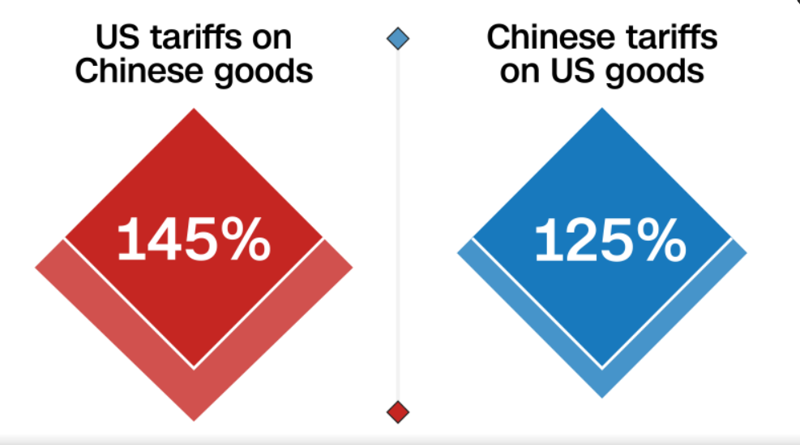
The summit produced some progress on agricultural market access and signaled a willingness to cut certain tariffs in targeted areas. China hinted at opening its farm markets more to American exports, and there were soft commitments around technology trade. But the core structure of US tariffs on Chinese goods, which surged dramatically in 2025, remained largely intact.
According to Harvard Business School research, the 2025 tariff increases already pushed retail prices of imported goods up by roughly 5.4% compared to pre-tariff trends. Domestic goods in import-heavy sectors rose about 3% over the same period. What makes 2026 particularly difficult is that only about one-fifth of those tariff costs have reached retail shelves. The rest is still working its way through the supply chain — which means consumers and businesses have more pain ahead.
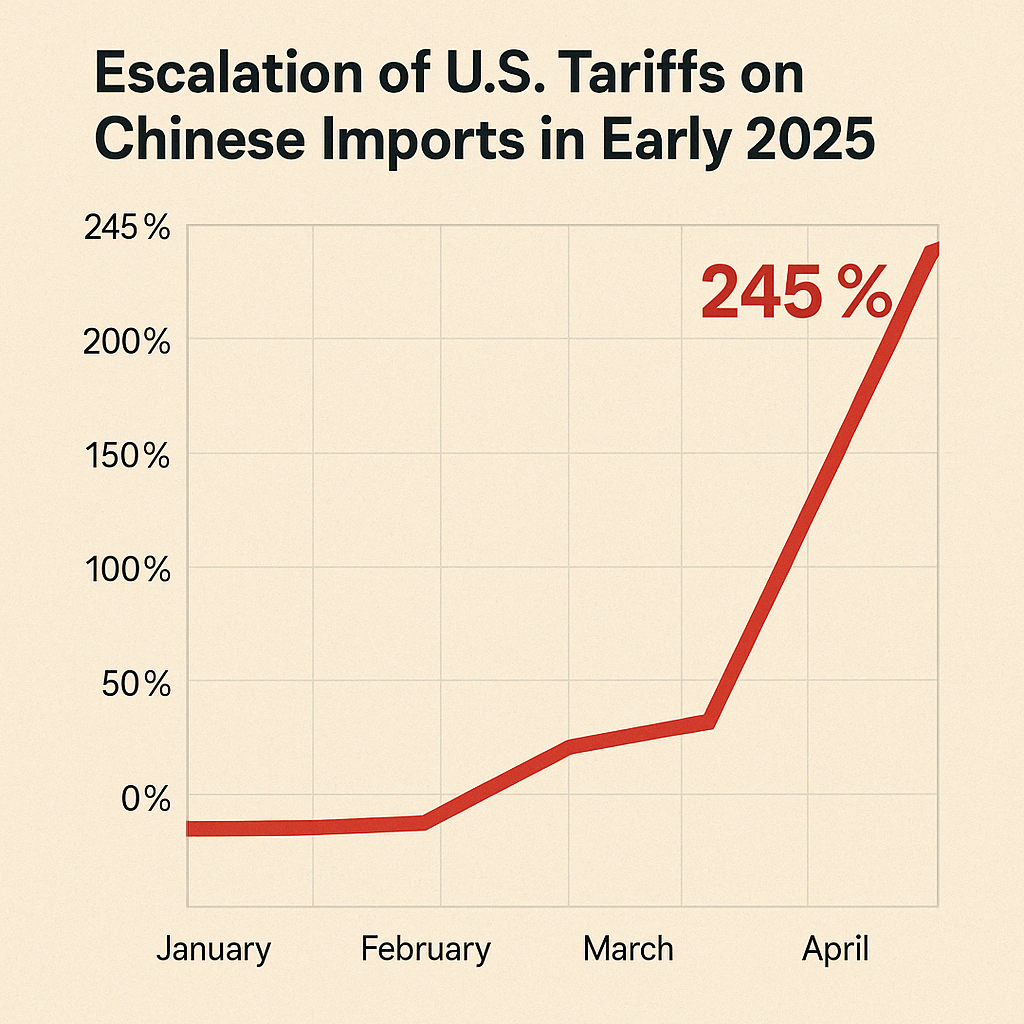
US-China tariff escalation has reshaped global supply chains since 2025. Image: Trade policy analysis
Industries Facing the Biggest Tariff Burden in 2026
Not every sector is hit equally. Here are the industries where the tariff impact is most acute right now, and where businesses need to adapt fastest.
1. Electronics and Semiconductors
This is the most exposed sector. The US-China tech competition has made semiconductors and consumer electronics ground zero for tariff escalation. Chips, circuit boards, smartphones, and computing components face layered tariffs that drive up costs at every stage of production. American companies that rely on Chinese manufacturing — and Chinese firms that depend on US-designed chips — are both squeezed. Businesses in this space should be actively diversifying their supplier base toward Vietnam, India, and Mexico to reduce single-country exposure.
2. Automotive and Electric Vehicles
The automotive sector is caught in a double bind. Chinese EVs, which were already making inroads in global markets, face steep import tariffs in the US and EU. Meanwhile, American automakers that source components from China — battery cells, rare earth magnets, specialty metals — are absorbing higher input costs. Detroit’s major manufacturers have already cut tens of thousands of jobs in part due to this pressure. The tariff burden on EV batteries alone is expected to add thousands of dollars to per-vehicle manufacturing costs in 2026.
3. Agriculture and Food Products
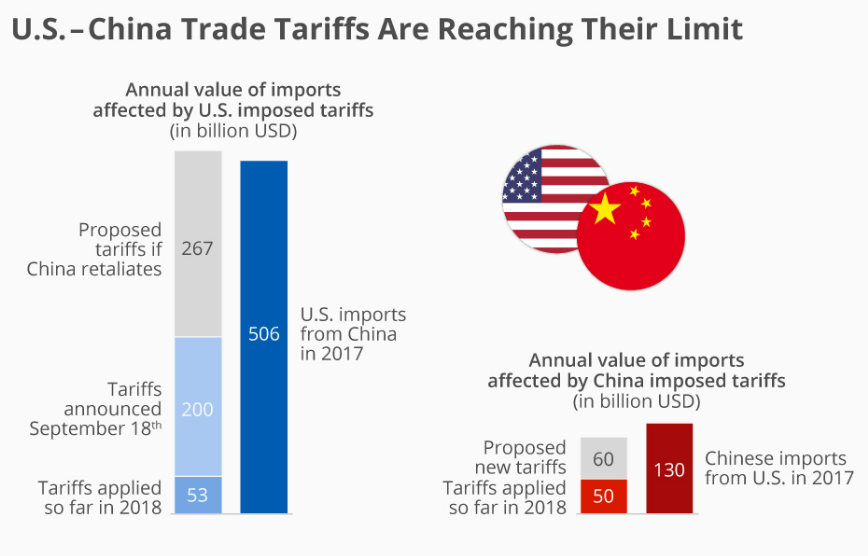
Here the picture is more mixed. American agricultural exporters — particularly soybean, pork, and grain producers — may benefit modestly if China follows through on opening farm market access. But the timeline is uncertain, and retaliatory tariffs from earlier rounds of the trade war are still affecting pricing. For food manufacturers that import ingredients or packaging from China, costs remain elevated.
4. Retail and Consumer Goods
Clothing, furniture, toys, and household goods imported from China are all seeing sustained price pressure. Retailers who have not yet passed on tariff costs to consumers are running out of room to absorb the margin squeeze. Expect more price increases on the shop floor through mid-2026, particularly in value retail segments that cannot easily switch suppliers.
5. Steel and Aluminum
The metals sector has been under tariff pressure since the first Trump administration, but the current round has intensified. Downstream manufacturers — from construction firms to appliance makers — are dealing with significantly higher material costs. Companies that build with steel or sell products containing aluminum components are seeing margin erosion that is difficult to offset through pricing alone.
What Smart Businesses Are Doing Right Now
The companies managing this environment best share a few common traits. They are not waiting for policy clarity that may never come. Instead, they are acting on what they can control.
“Make tariff and trade risk a standing item for the board or risk committee. Align your government affairs, supply chain, and finance teams around a shared playbook so that the next policy announcement triggers an agreed-upon response, rather than ad hoc improvisation.” — Harvard Business School
Supply chain diversification is the most common strategy. Moving production or sourcing away from China to countries like Vietnam, India, Malaysia, and Mexico reduces direct tariff exposure. This takes time to execute — typically 12 to 24 months for meaningful shifts — which is why companies that started in 2024 are already better positioned than those beginning in 2026.
Pricing strategy is the second major lever. Businesses are doing scenario testing to understand which product categories can absorb tariff pass-through and which require them to protect volume by holding prices steady and absorbing the hit. Getting this decision wrong in either direction — over-pricing and losing customers, or under-pricing and destroying margins — is a real risk.
The Long-Term Trade Landscape: Fragmentation Is the New Normal
Perhaps the most important thing to understand about tariffs in 2026 is that this is not a temporary disruption followed by a return to the old normal. Global trade is fragmenting into competing blocs — one centered on the US and its allies, one centered on China and its partners. Companies that build their strategies around a unified global supply chain are increasingly at risk.
According to UNCTAD’s 2026 trade analysis, geopolitical tensions and shifting supply chains are driving supplier diversification and nearshoring at scale. This is not speculation — it is already happening across multiple sectors simultaneously. The question for business leaders is not whether to adapt, but how fast they can move.
Tariffs after the Trump-Xi summit are unlikely to spike dramatically in the near term — both sides have incentives to avoid outright economic conflict. But a clean resolution is equally unlikely. For the industries most exposed, 2026 is a year to build resilience, not wait for relief.