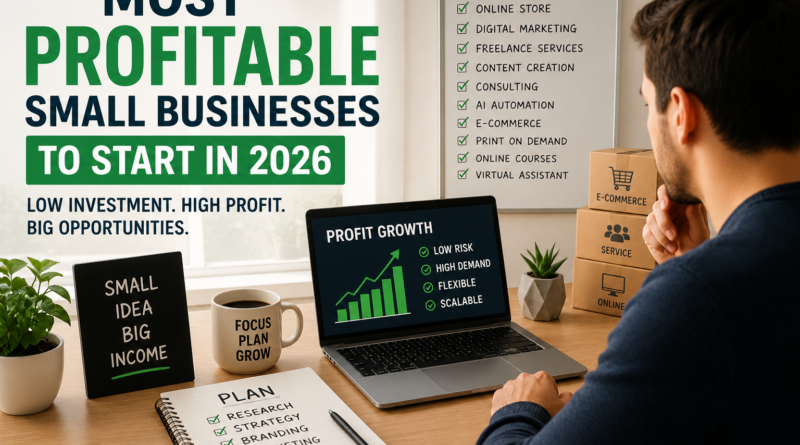
Most Profitable Small Businesses To Start In 2026
Starting a small business has never been more accessible. Digital tools, remote work, artificial intelligence, and online platforms have lowered the cost of building profitable businesses from home. In 2026, many entrepreneurs are focusing less on huge startup investments and more on flexible business models that can grow steadily over time.
The most successful small businesses today solve practical problems, operate online, and adapt quickly to changing consumer behavior. People are searching for business ideas that offer low startup costs, stable income, and long-term growth potential without requiring massive teams or office spaces.
That demand has created new opportunities across technology, digital services, e-commerce, content creation, and local service industries.
One of the fastest-growing business categories is online service-based work. Many freelancers are turning skills like graphic design, video editing, copywriting, website development, SEO, and social media management into full-time businesses.
As companies increasingly rely on digital marketing and online visibility, demand for skilled remote workers continues growing rapidly. Small businesses especially prefer outsourcing because it reduces hiring costs while still giving them access to professional services.
Artificial intelligence is also reshaping entrepreneurship.
Many entrepreneurs are now launching AI-powered businesses focused on content generation, automation, chatbot services, AI consulting, and workflow management. Businesses want faster ways to create marketing content, automate customer support, and improve productivity.
That demand is creating opportunities for people who understand how to use AI tools effectively, even without advanced technical backgrounds.
E-commerce also remains one of the most profitable business models worldwide.
Online stores selling niche products continue performing well because consumers increasingly prefer shopping online. However, successful e-commerce businesses today focus heavily on branding, trust, and targeted audiences instead of simply listing products.
Many entrepreneurs now use dropshipping, print-on-demand, and private labeling to reduce inventory risks while building scalable online stores.
Social media platforms have also changed how businesses grow.
Short-form video content on TikTok, Instagram Reels, and YouTube Shorts allows small brands to reach millions of people without large advertising budgets. Many profitable businesses now rely heavily on personal branding, storytelling, and organic content marketing.
Consumers increasingly buy from businesses they feel emotionally connected to.
That trend has helped creators turn audiences into income streams through digital products, memberships, coaching, affiliate marketing, and sponsored partnerships.
The creator economy itself has become a serious business sector.
People who once treated content creation as a hobby are now building full companies around podcasts, newsletters, YouTube channels, and niche communities. Businesses want attention, and creators who can attract loyal audiences often monetize faster than traditional startups.
Local businesses are also evolving rapidly.
Home cleaning, mobile car washing, pet care, food delivery, and repair services remain highly profitable because they solve everyday needs. Even in a digital world, convenience-based businesses continue generating strong demand.
Many local entrepreneurs now combine traditional services with online booking systems, digital marketing, and subscription models to increase recurring income.
Health and wellness businesses are also expanding quickly.
Consumers are spending more money on fitness coaching, healthy food products, supplements, mental wellness, and self-care services. Online fitness coaching and personalized nutrition programs have become especially popular because people want flexible solutions they can access from home.
At the same time, financial uncertainty has pushed many people toward side hustles and passive income opportunities.
This has increased interest in businesses that can start part-time and scale gradually. Affiliate marketing, blogging, digital courses, and online consulting continue attracting entrepreneurs because they require relatively low upfront investment.
However, experts warn that profitability depends less on trends and more on consistency.
Many people fail because they chase viral business ideas without building systems, customer trust, or long-term strategy. The businesses that survive are usually those focused on solving real problems rather than chasing fast money.
Customer experience now matters more than ever.
Online reviews, social proof, and brand reputation heavily influence buying decisions. Small businesses that communicate clearly, respond quickly, and build trust often outperform larger competitors.
Technology has made competition easier, but it has also made opportunity more accessible.
A person with a laptop, internet connection, and useful skill can now build a business that reaches customers worldwide. That level of access simply did not exist a decade ago.
Artificial intelligence, automation tools, and digital platforms continue lowering barriers for new entrepreneurs. Tasks that once required entire teams can now be managed by individuals using affordable software.
Still, starting a profitable business requires patience.
Many successful entrepreneurs spend months building audiences, refining products, and learning marketing before seeing consistent results. The businesses that last usually focus on long-term value instead of overnight success.
In 2026, the most profitable small businesses are likely to be those that combine technology, flexibility, and strong customer relationships.
Whether it’s an AI-powered service, an online store, a content-based brand, or a local convenience business, the biggest opportunities now belong to entrepreneurs who adapt quickly and communicate clearly.
The business world is changing fast, but one thing remains constant: people will always pay for solutions that save time, reduce stress, or improve daily life.