Deal with US not imminent, Iran says
Iran Says Progress Made in US Nuclear Talks, But Deal Still Not Final
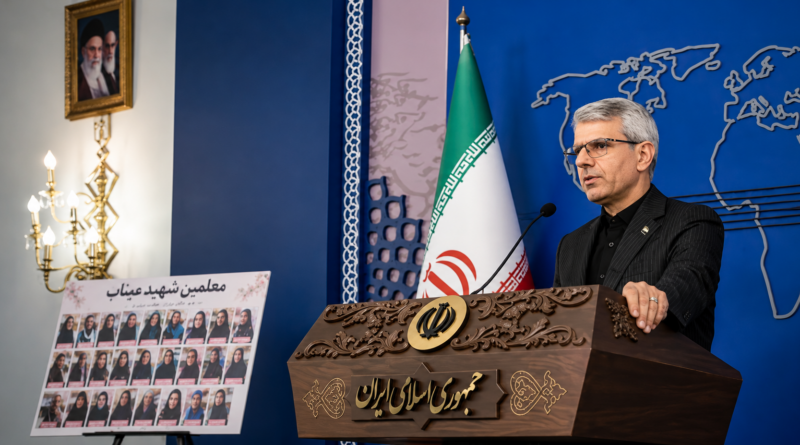
Negotiations between Iran and the United States have moved forward, but Tehran is pushing back on claims that a deal is about to be signed. Iranian Foreign Ministry spokesman Esmail Baqai confirmed on Monday that the two sides had reached agreement on a significant portion of the issues under discussion — but he was careful to add that no one should expect a final signing anytime soon.
“It is correct to say that we have reached a conclusion on a large portion of the issues under discussion,” Baqai said in Tehran. “But to say that this means the signing of an agreement is imminent — no one can make such a claim.”
His comments came just hours after US Secretary of State Marco Rubio told reporters in New Delhi that a deal could potentially be finalized that same day. “We thought we might have some news last night. Maybe today,” Rubio said, though he cautioned against reading too much into the optimism. “It takes a little while to hear back from Iran,” he added.
What the Proposed Iran-US Deal Reportedly Includes
According to media reports, the framework being discussed is a memorandum of understanding rather than a comprehensive final agreement. It reportedly includes a 60-day ceasefire extension, a plan to reopen the Strait of Hormuz — the critical waterway through which roughly 20% of the world’s oil and liquefied natural gas passes — and a roadmap for continued negotiations on Iran’s nuclear programme. Some of the most contentious issues, including the scope of sanctions relief, the release of frozen Iranian assets, and the exact terms around Iran’s uranium enrichment, are expected to be left for later rounds of talks.
This distinction matters. The deal on the table is not a resolution — it’s a pause that creates space for a resolution. Whether that space gets used productively depends entirely on the political will on both sides.
Why Talks Are Moving Slowly
Part of the delay in finalizing anything, according to CBS News, is a logistical one. US intelligence reportedly believes that Iran’s Supreme Leader Mojtaba Khamenei — who was wounded in an Israeli strike that killed his father and predecessor on the opening day of the conflict — is currently in an undisclosed location. That has made communication between him and Iran’s negotiating envoys more difficult, slowing the pace of the entire process.
President Donald Trump, for his part, has sent mixed signals. Over the weekend he suggested both sides were close to a deal, and then said he had told negotiators “not to rush into” one. That kind of back-and-forth reflects not just negotiating strategy but also real pressure from within his own party.
Republicans Split Over the Deal
The reported terms have divided Trump’s Republican base. Senator Ted Cruz called the potential agreement “a disastrous mistake.” Roger Wicker, chair of the Senate Armed Services Committee, argued that a 60-day ceasefire would render everything achieved during Operation Epic Fury meaningless. Senator Lindsey Graham — usually one of Trump’s closest allies — warned that any deal leaving Iran perceived as a dominant regional power raises questions about why the war started at all.
Trump responded by dismissing the critics as “losers,” saying the deal with Iran would either be “great and meaningful” or there would be no deal at all. It’s the kind of binary framing that leaves little room for the messy, incremental diplomacy that international agreements usually require.
Markets React, But Industry Stays Cautious
Financial markets responded positively to reports of possible progress. Oil prices dropped sharply and Asian stock markets climbed on Monday, reflecting hopes that a deal could ease global energy supply concerns. The Strait of Hormuz has been effectively closed since Iran blocked it in response to US and Israeli strikes, which began on February 28th and triggered a broader conflict across the Middle East.
But industry experts are urging caution. Lars Jensen, chief executive of Vespucci Maritime and former director at Maersk, told BBC Radio 4’s Today programme that even under the best-case scenario, it could take months before global shipping returns to the supply chain conditions that existed before the crisis. The physical infrastructure, routes, and commercial relationships that were disrupted don’t snap back overnight. Jensen said the shipping industry would remain “cautious and hesitant” about making major operational changes even if a deal were announced tomorrow.
The Nuclear Question Remains Central
Underneath all the diplomatic maneuvering is the core issue that has defined Iran-US relations for decades: Iran’s nuclear programme. Trump reiterated on Sunday that Iran “must understand” it cannot develop a nuclear weapon. Tehran continues to insist its programme is entirely peaceful.
At the start of the conflict, Iran was estimated to possess around 440 kilograms of uranium enriched to 60% purity — a level that puts it technically close to the 90% threshold needed for weapons-grade material. Some US media reports suggest the proposed deal could eventually require Iran to hand over its stockpile of highly enriched uranium, though this has not been confirmed by either side.
Iranian President Masoud Pezeshkian addressed the concern directly, telling state television that Iran is ready to “assure the world” it is not pursuing a nuclear weapon.
What Comes Next
A final Iran-US nuclear deal, if it happens, would mark a significant shift in Middle East geopolitics. But the gap between “progress on a large portion of issues” and a signed, certified agreement is still considerable. The US blockade of Iranian ports, established shortly after a ceasefire in early April, remains in place and will stay there, according to Trump, until a deal is fully signed and verified.
The coming days will test whether the optimism of both negotiating teams can survive contact with the political pressures bearing down on them from all directions.