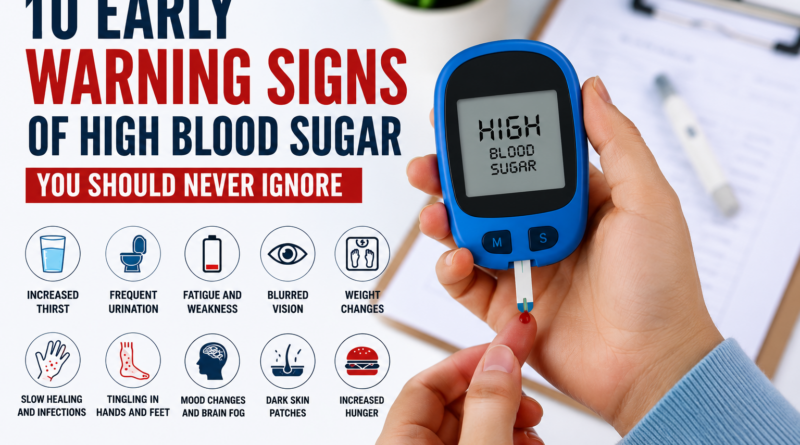
10 Early Warning Signs Of High Blood Sugar You Should Never Ignore
High blood sugar is becoming increasingly common because of poor diet, stress, lack of exercise, and unhealthy lifestyle habits. Many people ignore the early symptoms because they develop slowly and often seem harmless at first. However, untreated high blood sugar can lead to serious health problems, including type 2 diabetes, heart disease, kidney damage, and nerve complications.
Blood sugar rises when the body cannot properly use insulin or produce enough of it. Insulin helps move glucose from the bloodstream into the cells for energy. When this process stops working correctly, sugar builds up in the blood and starts affecting different organs and systems in the body.
Recognizing the early warning signs is important because early treatment and lifestyle changes can help prevent serious complications later.

Constant Thirst And Frequent Urination
One of the most common symptoms of high blood sugar is feeling constantly thirsty. When glucose levels become too high, the kidneys try to remove extra sugar through urine. This forces the body to lose more fluids than normal, causing dehydration.
As a result, people start drinking water more often but still feel thirsty throughout the day. Frequent urination, especially during the night, is also a major warning sign. Many people notice they wake up several times to use the bathroom without realizing it may be linked to blood sugar problems.
This symptom becomes more common in people with prediabetes and type 2 diabetes.
Constant Fatigue And Weakness
High blood sugar affects how the body produces energy. Even after eating properly or sleeping enough, many people still feel exhausted and mentally drained.
This happens because glucose remains trapped in the bloodstream instead of entering the body’s cells where it is needed for energy production. As a result, the body feels weak even when enough food has been consumed.
Fatigue linked to blood sugar problems often includes:
- Low energy levels
- Muscle weakness
- Difficulty staying active
- Mental tiredness
- Lack of motivation
Many people mistake this symptom for stress or lack of sleep while ignoring the underlying health issue.
Blurred Vision And Frequent Headaches
High glucose levels can affect the tiny blood vessels in the eyes. This may cause blurry vision, eye strain, and difficulty focusing. Some people notice changes while reading, driving, or using mobile screens.
Frequent headaches are also common because fluctuating blood sugar levels affect blood circulation and hydration levels in the body.
In some cases, vision problems improve once blood sugar becomes controlled. However, long-term uncontrolled diabetes can damage the eyes permanently and increase the risk of vision loss.
Increased Hunger And Sudden Weight Changes
People with high blood sugar often feel hungry even shortly after eating meals. The body struggles to use glucose properly, causing cells to signal for more energy.
Some people experience unexplained weight loss because the body starts breaking down fat and muscle for fuel when glucose cannot enter the cells effectively.
Others may gain weight because insulin resistance causes the body to store more fat, especially around the stomach area.
Common warning signs include:
- Constant hunger
- Sugar cravings
- Sudden weight loss
- Belly fat increase
- Frequent snacking
These symptoms are becoming more common because of processed foods and unhealthy eating habits.
Slow Healing And Frequent Infections
High blood sugar weakens the immune system and affects blood circulation. As a result, cuts, bruises, and infections take longer to heal.
People with elevated glucose levels are more likely to experience:
- Skin infections
- Gum disease
- Frequent colds
- Urinary tract infections
- Slow wound healing
Even small cuts may take weeks to recover properly. Poor circulation also reduces oxygen supply to different body parts, slowing down the healing process.
Ignoring these symptoms can increase the risk of serious infections later.
Tingling Hands And Feet
Long-term high blood sugar can damage nerves, especially in the hands and feet. This condition is known as diabetic neuropathy.
Many people describe the feeling as:
- Tingling
- Burning
- Numbness
- Sharp pain
- Pins and needles sensation
Nerve damage usually develops gradually, which is why people often ignore the symptoms during the early stages.
Managing blood sugar levels early can help reduce the risk of permanent nerve damage.
Dark Skin Patches And Skin Problems
Some people develop dark, thick skin patches around the neck, underarms, elbows, or knees. This condition is called acanthosis nigricans and is commonly linked to insulin resistance.
Other skin-related symptoms include:
- Dry skin
- Itching
- Skin irritation
- Frequent fungal infections
High blood sugar affects hydration levels and blood circulation, making skin problems more noticeable over time.
Mood Changes And Difficulty Concentrating
Blood sugar fluctuations can affect brain function and emotional health. Many people experience mood swings, anxiety, irritability, and difficulty focusing when glucose levels rise or drop suddenly.
Poor sleep caused by nighttime urination can also worsen stress and mental exhaustion.
People often report:
- Brain fog
- Poor memory
- Difficulty concentrating
- Mood swings
- Increased stress levels
These symptoms can impact work performance and daily activities.
Why Early Detection Matters
Millions of people worldwide have prediabetes or type 2 diabetes without knowing it. Early detection can prevent serious complications such as:
- Heart disease
- Kidney failure
- Vision problems
- Nerve damage
- Stroke
Healthy lifestyle habits play a major role in blood sugar control. Doctors often recommend:
- Regular exercise
- Balanced diet
- Weight management
- Reduced sugar intake
- Routine blood tests
People experiencing multiple symptoms should seek medical advice as early treatment can prevent long-term damage and improve overall health significantly.