PSG Win Champions League 2026 Paris Riots Leave 219 Injured
The PSG Champions League win should have been a night of pure celebration, but in Paris it ended in chaos. After Paris Saint-Germain beat Arsenal to lift Europe’s biggest club trophy, jubilation on the streets quickly spilled into violence, leaving 219 people injured and one man dead. Here is what happened, both on the pitch and across the French capital.
PSG beat Arsenal to retain the trophy
On the pitch, this was a triumph for the French champions. PSG defended their crown by defeating Arsenal in a tense penalty shootout, played out at the Puskás Aréna in Budapest. For Arsenal, the defeat was especially painful: the result denied the Gunners what would have been the first Champions League title in the club’s long history, coming so soon after their return to the top of English football. For PSG, it sealed back-to-back European glory and set off scenes of celebration that stretched from Hungary all the way back to Paris.
Celebrations on the Champs-Élysées turned violent
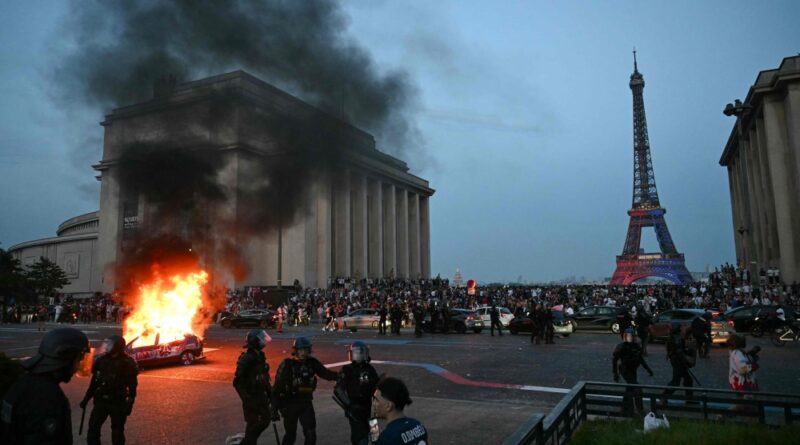
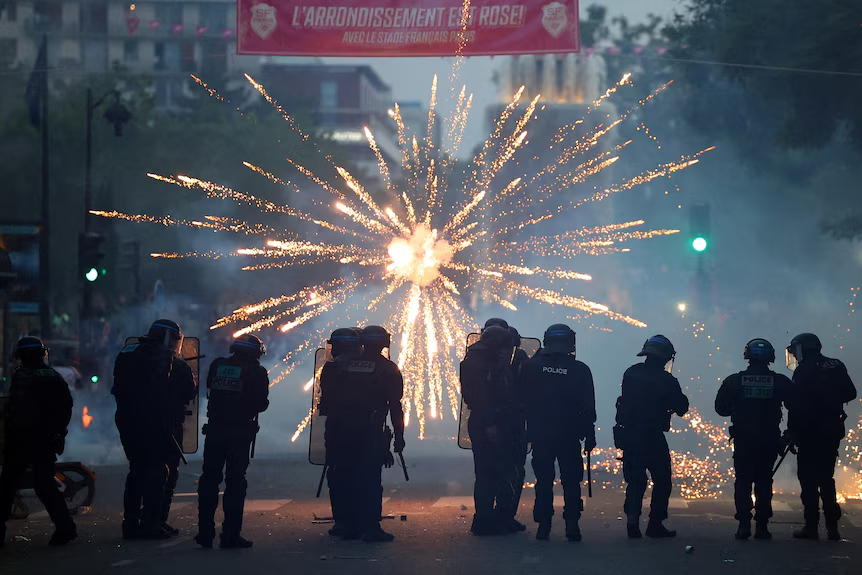
Within minutes of the final whistle, tens of thousands of supporters poured onto the streets. At one point, an estimated 20,000 fans packed the Champs-Élysées, with smaller crowds drifting toward the Arc de Triomphe and the Eiffel Tower. What began as a party did not stay that way. According to the Paris police prefecture, breakaway groups began setting off flares, lighting fires and targeting businesses, turning the heart of the city into a flashpoint. Officers fired tear gas to break up the crowds as the mood soured.
The damage was widespread. Footage from the night showed electric bikes and cars ablaze on the roads, and police later confirmed that a bakery and a restaurant had been seriously damaged. A breakaway faction even tried to storm a police station in the upmarket 8th Arrondissement before being pushed back. Elsewhere, rioters briefly blocked the busy ring road that circles Paris, and officers had to contain a crowd of around 1,000 people near PSG’s stadium, clearing makeshift barricades built from bicycles.
219 injured and one death
The human cost of the unrest was severe. Interior Minister Laurent Nuñez confirmed that 219 people were injured in clashes between fans and police across France, with eight in a serious condition. Among the injured were 57 police officers. The most tragic news came from the Paris ring road, where a 24-year-old man was found dead after an accident near Porte Maillot. The exact circumstances remain unclear, though some witnesses said he had been riding a motorcycle when he crashed into concrete blocks that rioters had used to try to block the road. Separately, a teenager was left in a critical condition after a brawl in another part of the city, though it was not confirmed whether that incident was linked to the football violence.
780 arrests across France
The scale of the police operation was vast. Nuñez said 780 people had been arrested over the violence nationwide, with more than 450 taken into custody and 480 of the arrests made in the Paris area alone. The Paris prosecutor’s office said the offences ranged from attacks on officers and property to theft and the illegal possession of weapons, and noted that the figures were still provisional. A significant number of those detained were minors, underlining how young some of those caught up in the disorder were. Thousands of officers had been deployed in advance precisely because trouble was expected, yet the unrest still disrupted bus, train and rail services across the capital.
This has happened before
For Paris, the pattern felt grimly familiar. When PSG won the same trophy for the first time a year earlier, the celebrations also turned deadly, with around 200 people injured and hundreds arrested across France. That history is exactly why authorities went into this final braced for violence. Nuñez was keen to stress that most fans had done nothing wrong, saying the vast majority go out to celebrate and the night passes peacefully. The problem, he argued, came from a minority who were not even there for the football. As he put it, the trouble came from people who do not watch the match but simply come to cause disorder, and he promised the security response would be firm.
Political reaction
The violence quickly became a political talking point. Far-right leader Marine Le Pen seized on the scenes, writing on X that only in France does a football club’s victory spark riots. She added that only in France do people feel they must lock themselves indoors on the night of a win to avoid being confronted with violence. Her comments reflected a wider national debate about public order that resurfaces every time mass celebrations descend into disorder, and they ensured the riots dominated headlines well beyond the sports pages.
Victory parade under heavy security
Despite the overnight chaos, the show went on. Around 6,000 police officers were mobilised for the victory parade held later on Sunday, centred on the Champ-de-Mars beside the Eiffel Tower. The players were due to tour the area before a reception hosted by French President Emmanuel Macron, turning the focus, at least officially, back to the sporting achievement. Nuñez insisted that France remained a country capable of maintaining public order, defending the right to assemble while drawing a hard line against what he called excesses.
The result cements PSG’s place among Europe’s elite and caps a remarkable run for the club. For Arsenal, the wait for a first European crown goes on. With another huge football summer ahead, fans are already looking to the next major event — you can read our guide to the FIFA World Cup 2026 schedule to see what comes next on the global stage.