How to Win a Scholarship in 2026: Apply Early, Apply Often
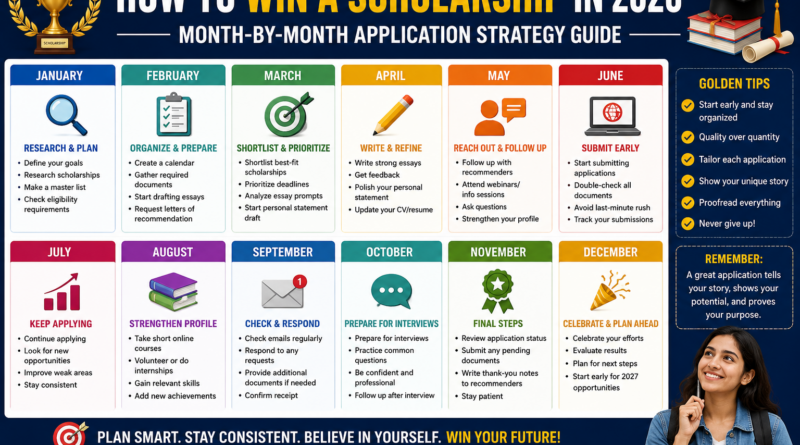
How to Win a Scholarship in 2026: Apply Early, Apply Often — A Month-by-Month Guide
Most students approach scholarships the wrong way. They wait until a deadline is weeks away, scramble to put together an application, submit something generic and under-polished, and then wonder why they did not get selected. The students who consistently win scholarships — and yes, there are students who win multiple major awards — do something different. They treat scholarship applications as a year-round strategic process, not a series of last-minute sprints. They apply early, apply often, and build each application with the same care they would give a job application for their dream role.
If you are an international student hoping to fund your studies in 2026 or 2027, this guide lays out exactly what that process looks like — month by month, with the specific actions that make a real difference in outcomes.
The Mindset Shift That Changes Everything
Scholarships are not lottery tickets. They are selection processes run by human beings who have a clear picture of what they are looking for and who evaluate applications against specific criteria. Understanding those criteria — and then demonstrating, specifically and credibly, that you meet them — is a skill that can be learned and improved. The students who win scholarships are not always the most academically gifted. They are the ones whose applications tell the clearest, most compelling story about who they are and why they deserve to be selected.
This matters because it means the outcome of your scholarship applications is significantly within your control. It also means that the preparation you put in before the application window opens — building your profile, clarifying your narrative, cultivating references — is as important as the application itself. The calendar below reflects that reality.

Winning scholarships in 2026 requires a year-round strategic approach — not last-minute applications. The students who succeed treat it as a serious, structured process.
The Month-by-Month Scholarship Strategy
Major international scholarships follow predictable annual cycles. Most open applications between August and November for study beginning the following September. Planning your activity around these cycles — rather than reacting to deadlines as they appear — puts you in a fundamentally stronger position.
Jan – Feb
Research phase. Identify every scholarship you are potentially eligible for. Build a spreadsheet with scholarship name, funding level, eligibility criteria, deadline, and required documents. Set calendar reminders for each deadline six weeks in advance. Subscribe to email lists for programs you are serious about. This is also the time to review your academic results and identify any gaps in your profile that you have time to address.
Mar – Apr
Profile building. Use these months to strengthen your application profile before windows open. Volunteer for leadership roles in organizations you are already part of. Take on a research project if you are at university. Start a community initiative if that reflects your goals. The best time to do things worth writing about in a scholarship essay is six to twelve months before you need to write about them.
May – Jun
References and test prep. Approach referees now — before you need them. Give them a clear brief on the scholarships you are applying for, what qualities they should emphasize, and a draft outline of how they might structure the letter. If the scholarships you are targeting require standardized tests (GRE, GMAT, IELTS, TOEFL), write those exams this semester so scores are available when applications open.
Jul – Aug
First draft essays. Most major scholarship windows open in August or September. Start drafting personal statements in July, before the windows open. Write your first draft without worrying about the word limit — just get your story on paper. Then refine, cut, and sharpen. Having a strong draft ready when the application portal opens means you can submit early, which matters more than most applicants realize.
Sep – Nov
Active application season. Submit applications as early as possible within each window. Committees often read applications on a rolling basis, and early submissions receive more careful attention than those received in the final 48 hours of a deadline. Follow up to confirm receipt of supporting documents from referees. Prepare for potential interviews by practicing with a mentor or a friend who can give honest feedback.
Dec – Jan
Results and reapplication. Most results come between December and March. If you are successful, celebrate and prepare. If you are not, request feedback where possible — some programs offer it — and use it to improve applications for the next cycle. Very few scholarship winners succeeded on their first attempt. The students who ultimately win are the ones who treat rejection as information rather than conclusion.
Writing a Personal Statement That Actually Gets Read
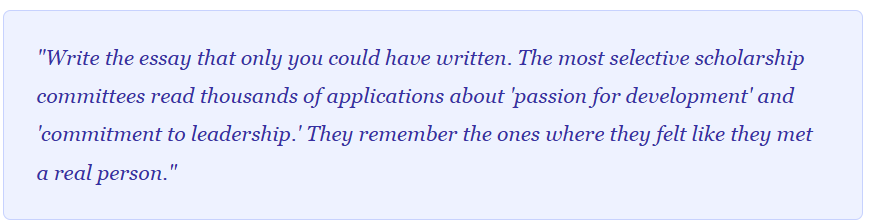
The personal statement is where most applications are won or lost, and it is where the most common mistakes are made. The most frequent problem is generic writing — statements that could have been written by any candidate, for any scholarship, about any field of study. Committees spot this immediately, and generic applications rarely advance past the first round of review.
A strong personal statement does four things. It opens with a specific, concrete story or observation that immediately establishes who you are and what drives you. It explains, precisely and without jargon, what you want to study and why — including why this particular scholarship, this particular country, and this particular moment in your career make this the right opportunity. It demonstrates, through specific examples rather than abstract claims, the leadership, resilience, or impact that the scholarship values. And it closes with a clear, credible picture of what you will do after you graduate — how the scholarship investment translates into value for your community or your country.
Common Mistakes That Kill Applications Before They Are Read
Beyond generic writing, several technical mistakes consistently eliminate otherwise strong applications. Submitting after the deadline — even by minutes — results in automatic disqualification at most major programs. Submitting documents in the wrong format, failing to meet minimum eligibility requirements listed clearly in the program guidelines, and exceeding word or character limits all signal carelessness that committees treat as disqualifying. Read every instruction carefully before you begin filling out the application, and read it again before you submit.
Plagiarizing previous successful essays is a serious and increasingly detected risk. Programs that have been running for decades often have large databases of previous submissions, and the reviewers are experienced enough to recognize recycled phrasing even without formal plagiarism detection. Everything you submit must be original, specific to your situation, and true.
The Most Reliable Sources for Finding Scholarships
Beyond the major programs covered in this guide, several databases aggregate scholarship opportunities by country, field of study, and degree level. Scholars4Dev is one of the most comprehensive free databases specifically focused on fully funded opportunities for students from developing countries. Opportunity Desk publishes regular roundups organized by deadline and eligibility. The financial aid offices at universities you are interested in attending are also an underused resource — they often have information about institution-specific funding that does not appear on any public database.
The scholarship landscape in 2026 is large, competitive, and genuinely accessible to students who approach it seriously. Record application numbers mean competition is higher than ever, but the number of awards available has also grown. The students who will succeed are not those with the most impressive CVs — they are those who start early, prepare thoroughly, write honestly, and do not stop applying after the first round of rejections. That combination of strategy and persistence is what turns scholarship ambitions into scholarship awards.