How Autonomous AI Systems Are Rewriting the Rules of Work
The AI conversation has moved to a new frontier. For the past few years, most people experienced artificial intelligence as a tool that responded — you gave it a prompt, it gave you an output. Useful, impressive in its range, but fundamentally reactive. In 2026, a new category of AI is arriving that works differently: agentic AI systems that can set goals, plan sequences of actions, use tools, browse the web, execute code, call APIs, and carry tasks through to completion with minimal human involvement at each step. This is not a marginal improvement. It is a qualitative shift in what AI can do — and a direct challenge to many assumptions about which jobs are safe from automation.
Understanding agentic AI — what it is, how it actually works, where it is already deployed, and what the realistic near-term implications are — is increasingly important for anyone who works with knowledge, manages a team, or is thinking about where their career is heading.
What Makes an AI System “Agentic”?
The term agentic refers to an AI system that can pursue goals autonomously over multiple steps, rather than simply responding to a single prompt. A standard AI assistant answers a question. An agentic AI system, given a goal like “research competitor pricing and produce a summary report,” will independently break that goal into steps, execute web searches, compile the information it finds, assess what is missing, fill those gaps, and deliver a completed output — all without needing to be guided through each step manually.
Several capabilities combine to make this possible. Large language models like GPT-4o, Claude, and Gemini now reliably reason through multi-step problems. They can call external tools — search engines, databases, code interpreters, APIs — and process the results. They can maintain context across long task sequences. And through techniques like chain-of-thought reasoning and ReAct prompting frameworks, they can self-correct when steps fail or return unexpected results. The combination of these capabilities, assembled into systems designed around a task loop rather than a single exchange, is what produces agentic behavior.
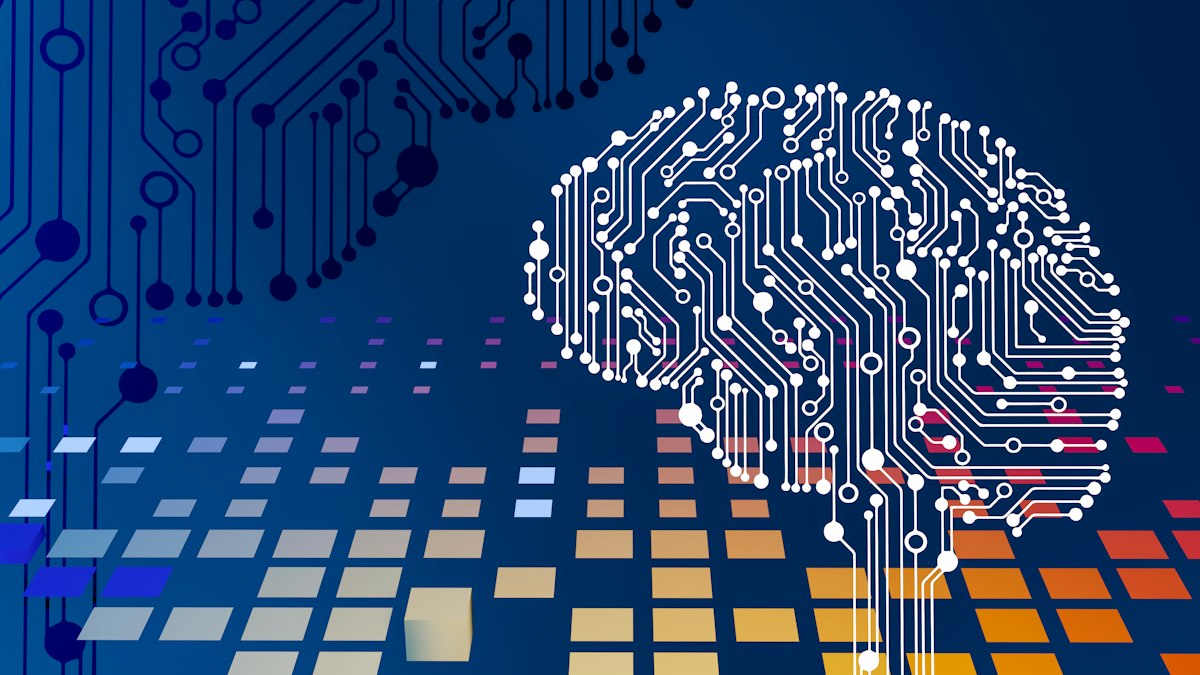
Agentic AI systems in 2026 can plan, execute, and complete complex multi-step tasks autonomously — a fundamental shift from the reactive AI tools of previous years.
Where Agentic AI Is Already Deployed in 2026
Agentic AI is not a future projection — it is already in production across a wide range of industries, performing work that previously required skilled human professionals. The deployment is uneven, moving faster in some sectors than others, but the direction is consistent across the board.
Software Development
This is the sector where agentic AI adoption is most advanced. AI coding agents can now write, test, debug, and deploy code with minimal human oversight. Tools like GitHub Copilot Workspace, Devin, and Claude Code can take a feature specification and produce working code, run tests, identify failures, fix them, and iterate — a process that previously required junior to mid-level engineering hours. The impact on hiring is already visible: software companies are reporting that engineering headcount needs have stabilized or declined even as output increases.
Legal and Compliance
Contract review, due diligence research, regulatory compliance checking, and legal research are all areas where agentic AI systems are now being deployed at scale in large law firms and corporate legal departments. Systems trained on legal corpora can process large document sets, identify relevant clauses, flag anomalies, and produce summary reports at speeds that would require large teams of paralegals to match. The impact on junior associate work is substantial and already recognized within the profession.
Financial Analysis and Research
Investment research, financial modeling, earnings analysis, and portfolio monitoring are all areas where agentic AI tools are handling tasks previously assigned to junior analysts. Systems that can monitor market data, apply analytical frameworks, identify signals, and produce structured reports are in active use at major financial institutions. The work is not being eliminated — but the ratio of human analysts to outputs produced has shifted significantly.
Customer Operations
Beyond simple chatbots, agentic customer service systems can now handle complex, multi-step service interactions — processing refunds that require checking multiple systems, scheduling appointments that involve availability checking and confirmation, and resolving billing disputes that require account review and policy application. These systems handle the full workflow end-to-end, not just the conversational front-end.
Marketing and Content Operations
Content strategy research, SEO analysis, article drafting, ad copy testing, social media scheduling, and performance reporting are increasingly handled by agentic marketing systems that operate entire workflows rather than assisting with individual tasks. Marketing agencies that once needed teams of ten to manage a content operation are finding that agentic systems can run equivalent workflows with two or three human strategists overseeing the operation.
The Job Market Question: What Is Actually Happening
The impact on employment is real but more nuanced than either “AI will take all jobs” or “AI creates as many jobs as it destroys.” What the 2026 data shows is that agentic AI is compressing entry-level white-collar positions — the jobs that involved collecting information, formatting reports, drafting standard documents, and performing structured analysis — while creating demand for workers who can design, prompt, oversee, and improve AI systems. The transition is not smooth or equitable. Workers who can adapt are more productive than ever. Workers whose roles consisted entirely of the tasks agentic AI now handles face a genuine and urgent need to develop new skills.
“Agentic AI is not eliminating expertise — it is eliminating the entry-level pipeline that used to build expertise. The professionals who will thrive are those who can work alongside these systems, not those who compete with them at the task level.”
What You Need to Know to Stay Relevant
For individuals and organizations navigating this shift, several things matter. First, understanding which of your current tasks are automatable by agentic AI — and which require the judgment, relationships, contextual understanding, or physical presence that AI cannot replicate — is the starting point for any meaningful career or workforce planning. The tasks most at risk are structured, repeated, information-based workflows. The tasks most protected are those requiring genuine novel judgment, human empathy, physical presence, or trust relationships that AI cannot establish.
Second, the ability to work effectively with agentic AI systems — to design tasks for them, evaluate their outputs critically, catch errors that require contextual understanding, and integrate their work into broader human-led processes — is rapidly becoming a core professional skill. Organizations like Coursera and DeepLearning.AI have published practical courses specifically on working with AI agents, and the investment of time in developing these skills now pays dividends that compound as AI capability continues to grow.
Agentic AI is the most significant shift in how knowledge work gets done since the introduction of the personal computer. The organizations and individuals who engage with it seriously — learning its capabilities and limitations, redesigning workflows around what it does well, and investing in the human skills it cannot replace — will be substantially better positioned than those who wait for clarity that is not coming. The clarity is already here. What remains is the decision about how to respond.